← Solar gearSOLAR GEAR / BUYER’S GUIDE
Portable power stations for RV life
Power Out There · September 29, 2026
Quiet battery power for the campsite, a place to plug in your laptop, and a way to store the afternoon’s sunshine. These four power stations offer different balances of capacity, output, and expandability.
Affiliate disclosure: As an Amazon Associate I earn from qualifying purchases. We may earn a commission when you buy through the Amazon links below.
This is a specification-based shortlist, not a hands-on test or sales ranking. We compare U.S. models using manufacturer information. Prices, sellers, availability, and included accessories can change; confirm the exact model and bundle on Amazon.
Compare the essentials
Watt-hours (Wh) describe stored energy. Watts (W) describe how much power a station can supply at once. More watts alone do not mean longer runtime.
All four use lithium iron phosphate (LiFePO₄/LFP) batteries. The figures above are manufacturer ratings, not measured results from Power Out There.
Compact everyday powerAnker SOLIX C1000 Gen 2

1,024 Wh capacity2,000 W AC output
A useful starting point for travelers who want a roughly 1 kWh battery with enough output for occasional higher-wattage appliances. Its 2,000 W continuous AC rating gives it more output headroom than the EcoFlow below, though their nominal energy storage is the same.
Before you buy: Choose this for a compact, self-contained setup. The C1000 Gen 2 does not accept expansion batteries; size it for your needs before buying.
Check Anker SOLIX C1000 Gen 2 on Amazon →Manufacturer specifications and product photo. Solar panels and extra batteries are not assumed included.
More energy for longer stopsJackery Explorer 2000 v2
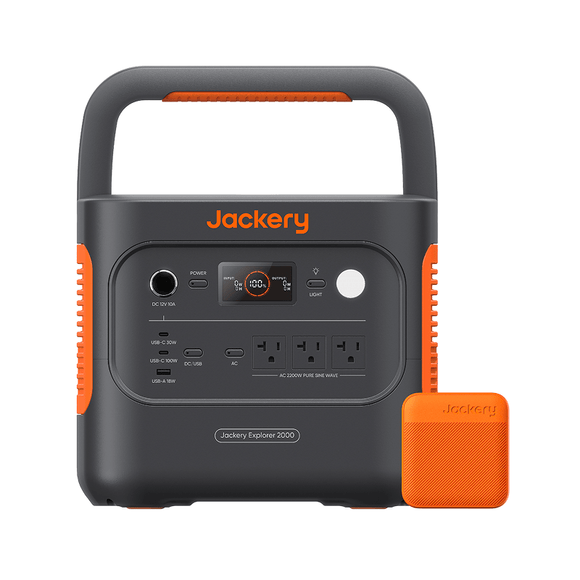
2,042 Wh capacity2,200 W AC output
With about twice the nominal capacity of the two 1 kWh models here, this is an appealing step up for longer stops and a larger daily energy budget. The 2,200 W AC output can accommodate many individual appliances, provided their running and starting requirements fit.
Before you buy: The Explorer 2000 v2 is a standalone battery, not an expandable system. Do not confuse it with the differently specified Explorer 2000 Plus.
Check Jackery Explorer 2000 v2 on Amazon →Manufacturer specifications and product photo. Solar panels and extra batteries are not assumed included.
Higher continuous outputBLUETTI Elite 200 V2

2,073.6 Wh capacity2,600 W AC output
This model combines roughly 2 kWh of storage with the highest continuous AC output in this shortlist. It is worth comparing when your appliance list calls for more output headroom, rather than simply more battery capacity.
Before you buy: Its 2,600 W rating is the normal continuous-output figure used in our comparison. The advertised Power Lifting mode is intended for suitable resistive loads and is not interchangeable with normal output.
Check BLUETTI Elite 200 V2 on Amazon →Manufacturer specifications and product photo. Solar panels and extra batteries are not assumed included.
Room to expandEcoFlow DELTA 3 Plus
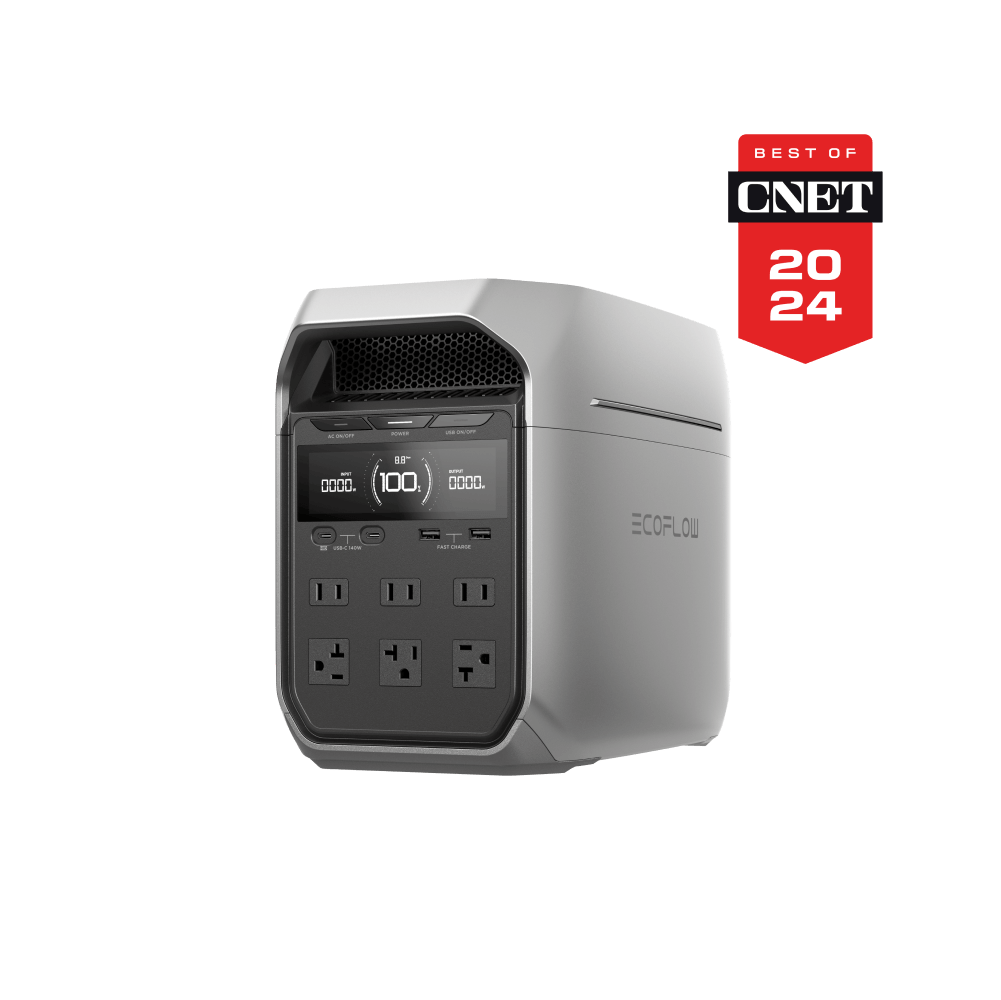
1,024 Wh capacity1,800 W AC output
A flexible choice if you want to start with 1 kWh and add a compatible battery later. Its two solar inputs support up to 1,000 W combined under the specified input limits, making charging flexibility a reason to consider it.
Before you buy: Expansion batteries, panels, and charging accessories cost extra. Check the exact battery and cable combination with EcoFlow. Use the 1,800 W normal AC rating when planning loads, rather than treating X-Boost as equivalent output.
Check EcoFlow DELTA 3 Plus on Amazon →Manufacturer specifications and product photo. Solar panels and extra batteries are not assumed included.
What size fits your camping routine?
Start with the devices you actually use. Multiply a steady load’s watts by its hours of use to estimate watt-hours. A 100 W load for five hours needs 500 Wh before conversion losses and the station’s own power use. Refrigerators cycle, so measured daily consumption is more useful than the compressor’s wattage alone.
A 1 kWh model is a starting point for a modest energy budget; a 2 kWh model gives more reserve. Neither category automatically means all-night RV air conditioning. Check running demand, startup requirements, and the energy needed for your intended runtime.
Adding solar comes next
A “solar generator” is a battery power station that can recharge from compatible solar panels. The panel is not necessarily in the box. Match its connector, polarity, voltage, and current to the station’s manual before buying a panel or bundle. Rated panel output is not a promise of what you will collect at a shaded campsite.
Read our RV solar basics guide →
Power a device or power the RV?
Plugging an appliance into a station is different from feeding an RV’s shore-power inlet. Before connecting the RV, check the station and RV instructions, outlet limits, compatible adapters, and grounding requirements. Do not assume a household outlet supplies a full 30 A RV hookup, and never backfeed through a wall outlet.
For trips where fuel-based recharging makes more sense, compare our inverter generator options.