GENERATORS / BUYER'S GUIDE
Popular RV generators: Honda, Yamaha, Champion, and a budget pick
Affiliate disclosure: As an Amazon Associate I earn from qualifying purchases. Links to Amazon on this page are affiliate links, and buying through them may earn us a commission at no extra cost to you.
These are the inverter generators RV travelers ask about most, grouped by brand. Before choosing, add up what you need to run at the same time—our RV generator sizing guide walks through running watts and starting demand. As a rough rule, a 2,000–2,500 W unit covers charging, lights, and small appliances, while running a typical rooftop air conditioner usually calls for about 3,000 W or more, a soft-start kit, or two smaller units in parallel.
Quick comparison
| Model | Starting / running W (gas) | Fuel | Best for |
|---|---|---|---|
| Honda EU2200i | 2,200 / 1,800 | Gas | Quiet campgrounds, smaller rigs |
| Honda EU3000iS | 3,000 / 2,800 | Gas | Running RV A/C on one unit |
| Yamaha EF2200iS | 2,200 / 1,800 | Gas | Premium 2,200 W alternative with RV outlet |
| Champion 4000 W Dual Fuel | 4,000 / 3,000 | Gas or propane | Mid-price A/C-capable setup |
| Champion 4500 W Dual Fuel, Electric Start | 4,500 / 3,500 | Gas or propane | More headroom, push-button start |
| maXpeedingrods MXR4000 | 4,000 / 3,200 | Gas | Budget A/C-capable pick |
| maXpeedingrods 2500 W Dual Fuel | 2,500 / 1,850 | Gas or propane | Budget small-rig or backup unit |
Specs are from manufacturer listings as of September 2026. Check the current listing before you buy—models and bundles change.
Honda
Honda EU2200i

The generator you'll hear least in most campgrounds. It's the benchmark many RVers compare everything else against.
- 2,200 starting / 1,800 running watts
- Rated 48–57 dB(A)
- CO-MINDER automatic shutdown and Bluetooth app monitoring
- Parallel-capable with a second unit for more power
Honda EU3000iS

Honda's larger inverter with electric start. Honda lists it as suitable for most 13,500 BTU RV air conditioners.
- 3,000 starting / 2,800 running watts
- 3.4-gallon tank; Honda lists 6.9–19.6 hours of runtime depending on load
- Electric start and CO-MINDER
- Heavier than the 2200—plan for a way to lift or roll it
Yamaha
Yamaha EF2200iS

Yamaha's answer to the Honda EU2200i, with a standard RV outlet so you can plug in without an adapter.
- 2,200 starting / 1,800 running watts
- 79cc engine with Smart Throttle load sensing
- Standard RV outlet and DC outlet
- Illuminated LED status display
Champion
Champion 4000-Watt Dual Fuel RV Ready Inverter
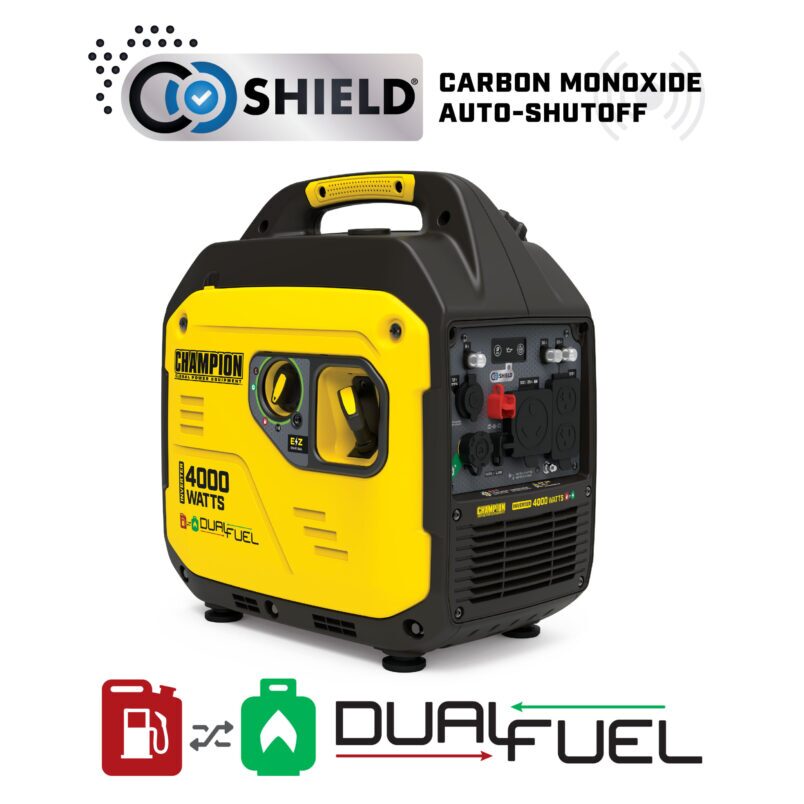
Runs on gasoline or propane out of the box—handy if your RV already carries propane.
- 4,000 starting / 3,000 running watts on gas; 2,700 running on propane
- Up to 10 hours on gas, up to 25 hours on propane (manufacturer figures)
- TT-30R RV outlet, CO Shield automatic shutoff
- Rated 64 dBA at 23 feet
Champion 4500-Watt Dual Fuel Inverter, Electric Start
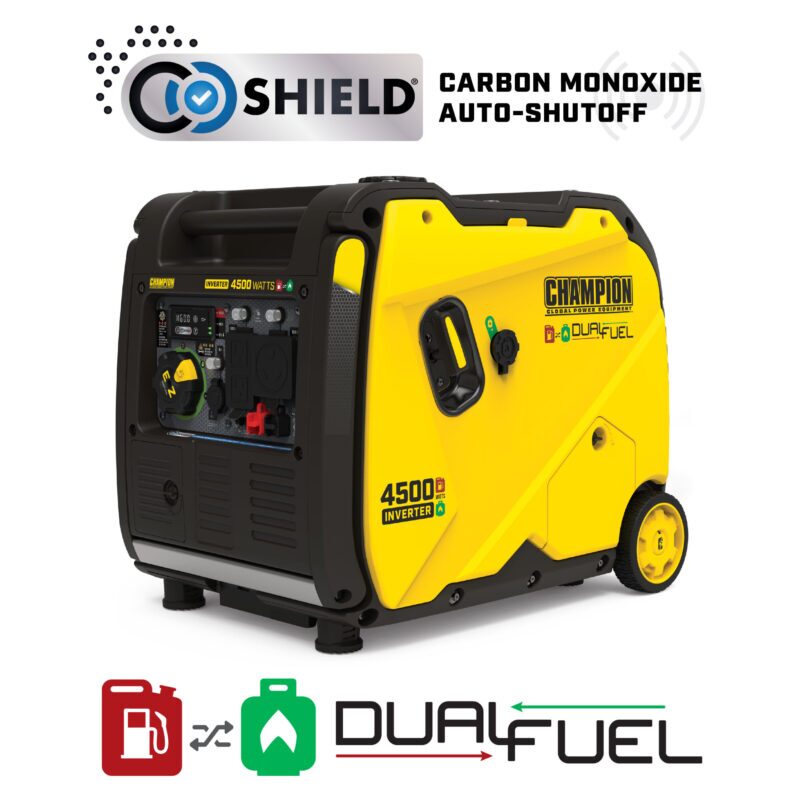
A step up in output with push-button starting, which matters if you'll be pulling a recoil cord every morning.
- 4,500 starting / 3,500 running watts on gas; 3,150 running on propane
- Up to 14 hours on gas, up to 21 hours on propane (manufacturer figures)
- Rated 61 dBA; CO Shield automatic shutoff
- Parallel-ready with an optional kit
Budget value: maXpeedingrods
maXpeedingrods MXR4000

A lower-cost way to get into the 3,000+ running-watt range. It hasn't built the long track record of Honda or Yamaha, so weigh warranty and service options.
- 4,000 peak / 3,200 running watts
- NEMA L5-30R RV outlet with adapter
- About 48.5 lb (manufacturer figure)
- App monitoring for output, fuel level, and ECO mode
maXpeedingrods 2500W Dual Fuel

A light, low-cost unit for charging, lights, and small appliances—or as a backup.
- 2,500 peak / 1,850 running watts on gas; 2,300 / 1,650 on propane
- About 40 lb (manufacturer figure)
- CO sensor with automatic shutdown, ECO mode
- Parallel-capable with an optional kit
Before you buy
Match the generator's RV outlet to your rig's plug (TT-30 for most 30-amp RVs) or plan for an adapter. Check campground quiet hours and generator rules. Run portable generators outdoors only—never inside or under your RV or in a storage compartment—and follow CDC guidance to keep them at least 20 feet from windows, doors, and vents. Carbon monoxide can build up quickly, even with an automatic shutoff. See our sizing guide for more on placement.
Editorial note: This is a buyer's guide based on manufacturer specifications, not a hands-on product test. Product photos are from the respective manufacturers; appearance and included accessories can vary by version.